Rollators and Walkers Buyer’s Guide

9 minute read
Tom Rogers
Written by Tom Rogers
George Powney
Reviewed by George Powney
Guide - Rollators and Walkers
Skip to section

A rollator or 4-wheel walker is a commonly used walking aid that offers essential support both at home and outdoors. Given the diverse selection of designs available, the key to choosing the right one is ensuring it aligns with the intended use, is correctly sized for the user, and is easy to store and transport.

This guide provides general information to help you make informed decisions when purchasing a rollator. It covers essential considerations before you buy, what to test upon delivery, and factors for long-term ownership.

What to check before you buy a Rollator

Handle height

Having the handles set to the correct height helps the rollator feel natural to use. A simple starting point is checking the wrist height. When buying online, do not rely only on having adjustable handles. Check the handle height range in the specifications and make sure it includes a comfortable height for the intended user.

Seat height and width

If you would like a rollator or 4-wheel walker with a seat, check the seat height and the seat width. Having a appropriate seat height affects how comfortable it feels to sit down and how stable you feel when you stand up again. Seat width affects comfort,especially if the seat will be used often.

User weight and product capacity

Every rollator has a maximum user weight. This should always be checked before purchasing. If you are purchasing for someone else, confirm the user’s weight first, then compare it to the rollator capacity.

If you are looking specifically for higher capacity options, browse our Heavy Duty Rollators collection.

Width and indoor fit

Indoor rollators need to be checked to ensure they will fit through the home’s narrowest doorway. Many homes have a bathroom or hallway door that is narrower than expected.

It is also important to consider tight turns. A rollator or 4-wheel walker may fit through a doorway, but it can still be awkward if you need to turn immediately after entering/exiting a room, such as turning into a bathroom or around a hallway corner.

Trust Care Logo
13814
VAT Relief
Trust Care

Let's Go Indoor Rollator - Beech

(12)

The Lets Go Indoor Rollator is designed for safe, confident mobility at home. Featuring a sturdy aluminium frame, easy one-hand brakes with parking function, adjustable ergonomic handles, and smooth manoeuvrability in tight spaces. Also folds compactly for easy storage and transport.

  • Ideal for hallways and doorways
  • Lightweight aluminium frame at 6.4kg
  • Folds easily for storage and transport
£216.67
with VAT Relief
£260.00 Incl. VAT
View Product

Things to consider before choosing a rollator

Where will you use the rollator most often?

Start by thinking about your typical daily routes rather than occasional journeys.

If you use a rollator mainly indoors, it is usually more important that it feels easy to steer around furniture and fits comfortably through doorways.

If you use a 4-wheel walker or rollator mainly outdoors, it is usually more important that it handles uneven pavements and small obstacles well, and that it feels steady and controlled on longer outings.

If you plan to use it both indoors and outdoors, you may want a balanced option that feels manageable at home but still performs well outside.

What surfaces will you be using it on?

Surface type can make a noticeable difference to how a rollator feels in everyday use. Smooth floors at home are very different to cracked pavements, kerbs, and uneven paths.

If your regular routes include rougher surfaces, browse our range of All-Terrain Rollators designed for outdoor use.

What wheel size is better for pavements and uneven surfaces?

Larger wheels tend to roll more smoothly over cracks and uneven paving, making them well-suited for outdoor surfaces. Smaller wheels may be easier to manoeuvre in tight indoor spaces. Consider the surfaces you use most when choosing a wheel size that matches your needs.

Do you need to lift or transport the rollator?

If the rollator will be placed into a car boot, used on days out, or stored in a cupboard, portability is a key factor. It is important to look at:

  • Folded dimensions, not just the fact that it folds
  • Folding method, and whether it looks straightforward to use
  • Overall weight, especially if it will be lifted regularly

A common issue is buying a rollator that fits in the boot but is awkward to lift through the opening. Measuring the boot opening height and width can help avoid this.

Transport and portability

Portability is one of the most common reasons people regret a purchase. If you plan to transport the rollator in a car, measure:

  • The boot opening height
  • The boot opening width at the narrowest point
  • The usable boot floor space

Then compare those measurements to the rollator’s folded dimensions. If portability is a priority, browse our Travel or Lightweight Rollator collections.

Rehasense Logo
14152
VAT Relief
Rehasense

Space Carbon Fibre Rollator

(2)

The Space CF is a super lightweight carbon fibre rollator tipping the scale at just 5kg. It is the easiest ‘X’ frame style rollator to lift turn and manoeuvre. Supplied with a 7 year warranty.

  • Weighs a mere 5kg
  • Very easy to lift and turn
  • 7 year warranty
from
£332.50
with VAT Relief
£399.00 Incl. VAT
View Product

Common mistakes to avoid when buying a rollator

Many buying problems are easy to avoid if you know what to check.

A common issue is buying a rollator or 4-wheel walker that fits most doorways but not the narrowest one at home. Measure the narrowest doorway first to prevent this. Also, check the car boot opening size before purchasing to avoid lifting difficulties. Confirm seat height and width if you plan to use the seat often.

Measuring both your car boot opening and the rollator’s folded size helps ensure easy lifting and storage.

Check seat measurements early if you plan to use the seat regularly, as size and comfort matter.

When portability matters, consider folded size and method as well as product weight for easier transport.

Compare rollators before buying

If you have looked at several models and feel stuck, a structured comparison makes the decision much easier.

Step 1: Choose options

Pick 3-4 rollators or 4-wheel walkers you would be happy to own based on price range and general look. Do not choose ten. Three is enough for a clear decision.

Step 2: Compare the same key specifications

Use the same set of checks for each option. This avoids being distracted by minor differences.

  1. Overall width (especially important for indoor use)
  2. Handle height adjustment range.
  3. Product weight (important if lifting into a car)
  4. Folded dimensions (important if storing or transporting)
  5. Wheel suitability for your usual surfaces
  6. Seat height and seat width, if the rollator includes a seat, and you plan to use it

Step 3: Apply the deal breaker rules

Remove any model that fails one of your key requirements. Common deal breakers include:

  • It is too wide for the narrowest doorway.
  • The handle height range does not suit the user.
  • It is too heavy to lift comfortably.
  • The folded size does not fit the storage space or the boot opening.
  • The seat dimensions are not suitable for the intended user.

If a model does not meet a key requirement, remove it from the list. This approach is often faster than adding more options to compare.

How to test a rollator at home once it arrives

When a rollator arrives, the first 10-30 minutes are important. A small adjustment can make a large difference to comfort and confidence.

Step 1: Adjust handle height

Set the handles to a comfortable height. A good starting point is your wrist height when standing upright with your arms relaxed. The aim is a natural posture with relaxed shoulders and a comfortable arm position.

Step 2: Check brake feel on a flat surface

Roll the rollator gently and apply the brakes. It should slow smoothly and evenly. If the rollator has a parking lock, apply it and check that the rollator remains stationary when stopped.

Step 3: Check storage and folding

If you plan to fold the rollator, practise folding and unfolding it several times. Make sure it feels manageable and secure. Then place it where you plan to store it and confirm it fits comfortably. If it is for a car boot, try loading it into the boot to confirm folded dimensions and lifting practicality.

Step 4: Comfort check after short use

After a few minutes of walking, ask yourself:

  • Do the handles feel comfortable in the hands?
  • Does steering feel manageable in tight spaces?
  • Does the rollator feel stable when stopping?
Topro Logo

The Topro Olympos has been designed specifically for outdoor use but can also be used inside.It features large wheels for use on different types of terrain. It is easy to fold and unfold and requires little space to store. Supplied with backrest.

  • Designed especially for outdoor use
  • Easy to fold/unfold
  • Tyres ideal for rough terrain
from
£315.83
with VAT Relief
£379.00 Incl. VAT
View Product

Rollator maintenance tips

All rollators and 4-wheel walkers come with a user manual, and it is important to read and follow the instructions for your model. Rollators should be checked regularly for signs of wear or damage. Pay particular attention to the frame, wheels, brakes, handles, and any folding points.

Weekly quick check (if used regularly)Monthly check
Brakes feel consistent, Wheels roll smoothly, Nothing feels loose or rattles, The frame looks secure with no obvious damageFixings and joints for looseness, Brake cables and brake response Wheel wear and how the rollator tracks when pushed forward Folding points for smooth operation


What early wear can look like

Early signs that something may need attention include:

  • The brakes are feeling less responsive than before
  • Wheels that do not roll freely or feel gritty
  • A new wobble or rattle that was not present before
  • The rollator is pulling slightly to one side on a flat surface.
  • Folding is becoming stiff or uneven.

If damage or unusual wear is noticed, contact the manufacturer or supplier for advice or replacement parts.

Checklist before purchasing a rollator

  1. The handle height range suits the intended user.
  2. If a seat is included, the seat height and seat width are suitable.
  3. The maximum user weight capacity is suitable.
  4. If used indoors, the overall width fits the narrowest doorway and turning space.
  5. If transported, the folded dimensions fit the storage space and boot opening.
  6. The brakes appear easy to operate, and a parking lock is included if required.
  7. Returns, warranty, and support information are clear.

Rollator accessories

Accessories can improve convenience, but it is best to start with the correct rollator or 4-wheel walker first. A well-chosen rollator should meet most everyday needs without additions.

Once you are confident the rollator suits the user and environment, accessories can be added to solve specific day-to-day tasks, such as carrying items or providing extra support when seated. It is worth considering whether an accessory will be used regularly and whether it affects weight, folding, or manoeuvrability. Carefully chosen accessories should enhance usability without making the rollator more awkward to manage.

Choosing the right rollator is less about finding the “best” model and more about finding the one that fits the user, the home, and everyday routines properly. Taking time to measure key spaces, carefully compare specifications, and honestly consider how and where the rollator will be used can prevent common frustrations later. A well-chosen rollator should feel supportive, predictable, and easy to live with, not something that needs constant adjustment or compromise.

If you are unsure what type of rollator or 4-wheel walker is most suitable, it can be helpful to discuss your concerns with your GP. They may also suggest speaking with an occupational therapist or a district nurse, who can offer practical advice tailored to your mobility, home environment, and day-to-day needs. With the right preparation and guidance, a rollator can become a reliable part of everyday life rather than something you have to work around.

Tom Rogers
Written by
Tom Rogers
Tom Rogers is Manage At Home’s content marketing specialist with over 6 years of experience in writing for mobility and independence publications.
George Powney
Reviewed by
George Powney
George has 10x years' experience as an Occupational Therapist working across NHS and Adult Social Care. George supports our Southwest Region of the UK with his specialist knowledge of Moving and Handling equipment to support individuals with their daily tasks.

HCPC registered OT
This article is for informational purposes only.

Comments

Leave a comment

Please note, comments need to be approved before they are published.

Related Articles

Elderly couple walking along a snowy woodland path in winter, with one person using a rollator walker as others walk ahead in the distance. Image
09/01/2026

10 Essential Winter Safety Tips for Rollator Users

Winter weather can bring extra challenges for people using rollators. Snow, ice, wet pavements and shorter daylight hours can all make everyday walking feel more unpredictable, especially when surfaces are slippery or visibility is reduced.

With a few simple checks and sensible habits, it’s still possible to get out and about with confidence during the colder months. These winter rollator safety tips offer practical, everyday guidance for adults using rollators, people new to mobility aids, and carers supporting someone through winter conditions.

Read article
Four varied rollators displayed on a blue gradient, titled 4 Different Types of Rollators From the Manage At Home Website.. Image
17/01/2024

4 Different Types of Rollators From the Manage At Home Website

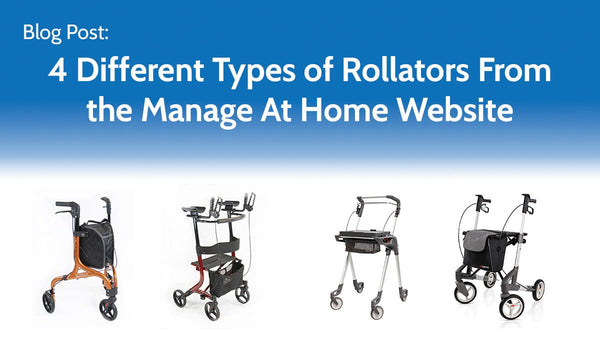
As we age, we all grow to have different needs. some of us will go our whole lives without requiring some sort of mobility aid, where as others may need them for daily use. Thankfully, there are solutions out there than can help us when we require that bit extra help, but just like the level of need in people being varied, we also cannot expect there to be a 'one size fits all solution'. In this blog post we'll provide an insight into just four of the different types of rollators available on the Manage At Home Website.
Read article
A person in a wheelchair plays with a standing dog on a wooden boardwalk by the sea during an orange and pink sunset. Image
11/05/2023

The Benefits of Powerchairs and Scooters

As we age, mobility can become a challenge. However, with the help of powerchairs and scooters, you can regain your independence and enjoy the many benefits of being mobile.
Read article